
August 5, 20268 min read
7 Pressed Flower Art Ideas (From Ten-Minute to Heirloom)
Once you have a folder of pressed flowers, the hard part isn't technique — it's deciding what to make. Scattering petals across a page is where most people start, and it's also where most people stall, because a random scatter rarely looks as good as the flowers did individually.
The projects below are ordered roughly from easiest to most involved. What they have in common is structure: each one gives the petals a job to do, which is the difference between an arrangement that looks composed and one that looks spilled.
1. The silhouette (the most forgiving idea here)
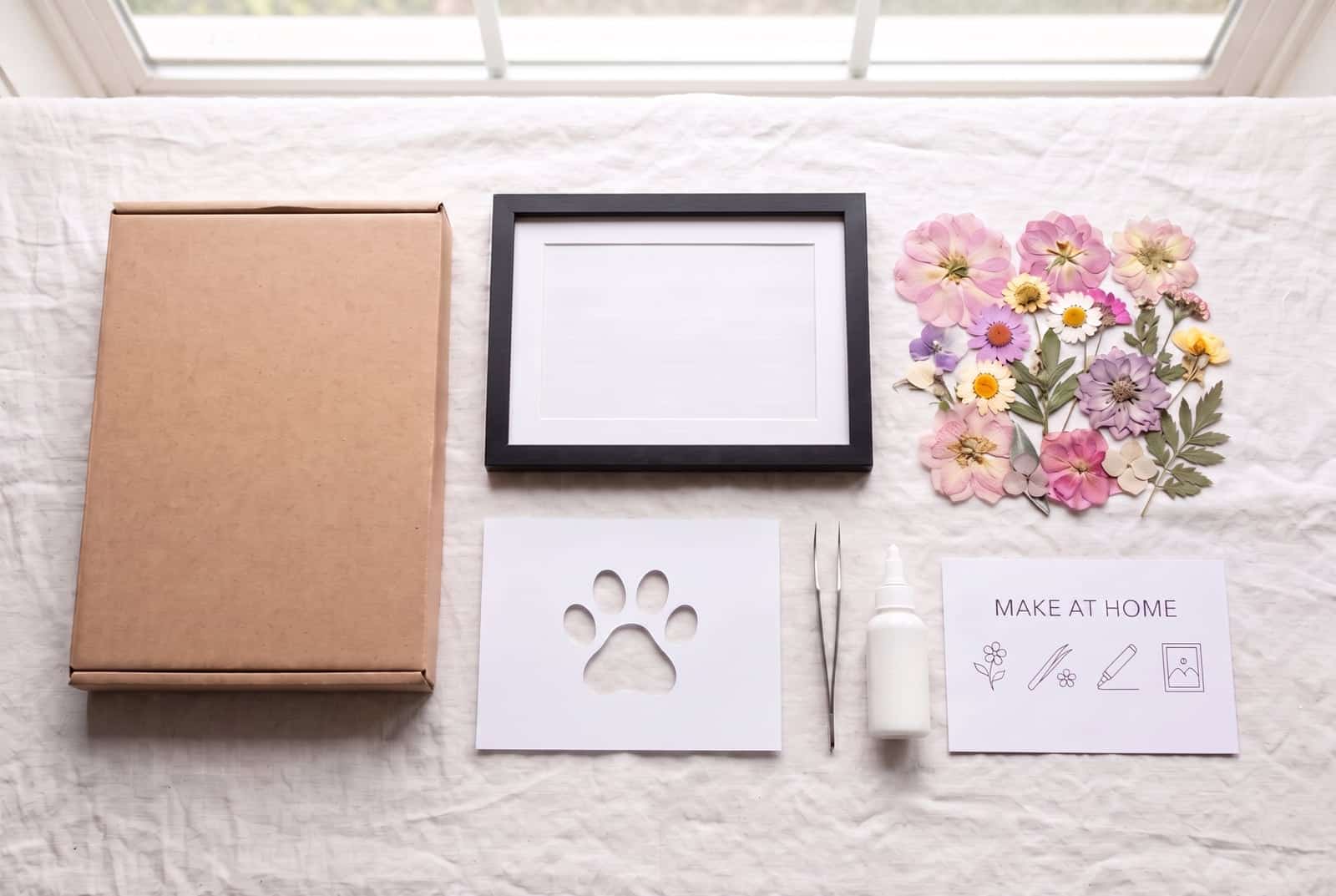
Fill a recognisable shape — an animal, a paw print, a heart, a state outline, a letter — with pressed flowers, and mask everything outside the shape with card stock. The outline does the compositional work, so the petals inside can be arranged loosely and it still reads as deliberate.
This is the single best project for anyone who insists they aren't artistic, because the shape is guaranteed before you place a single flower. It's the format every one of our kits uses, and the reason the results look consistent across wildly different skill levels.
2. The single specimen study
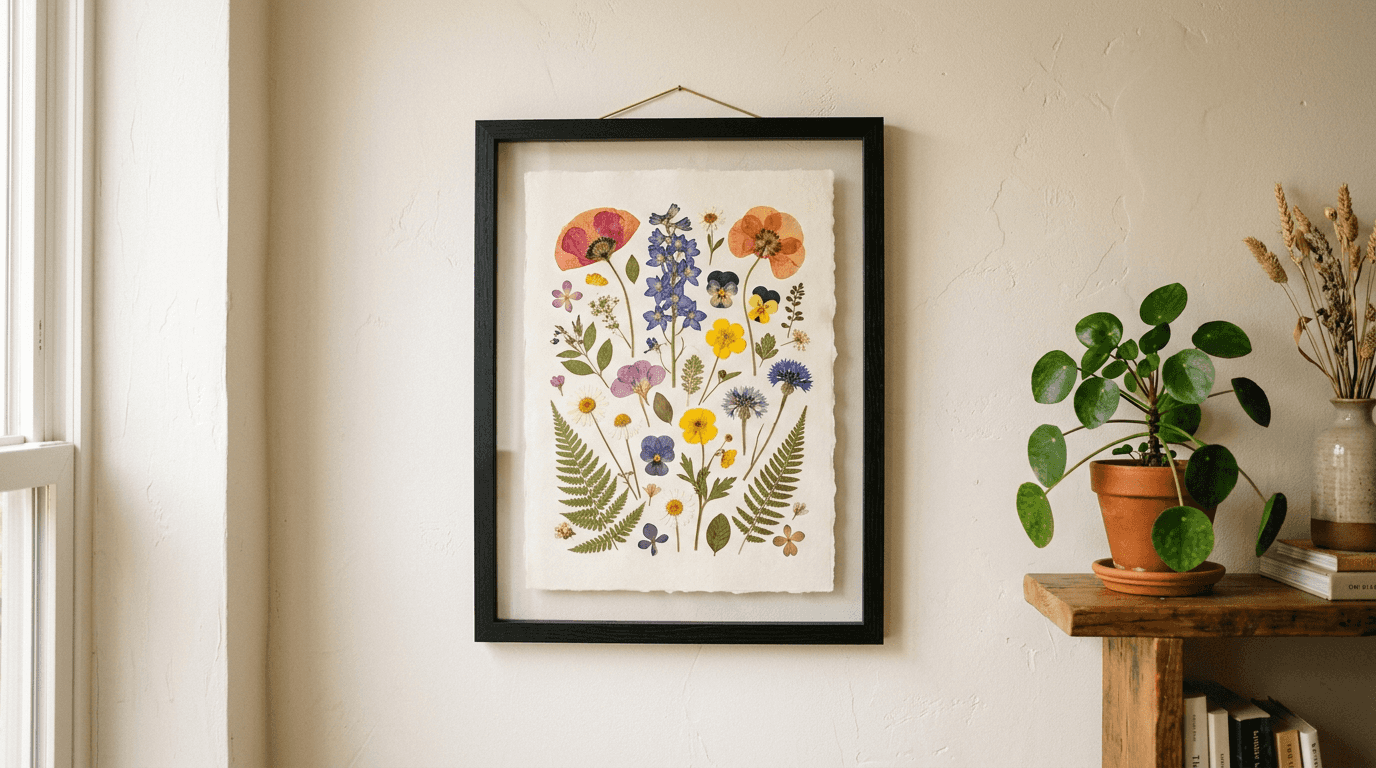
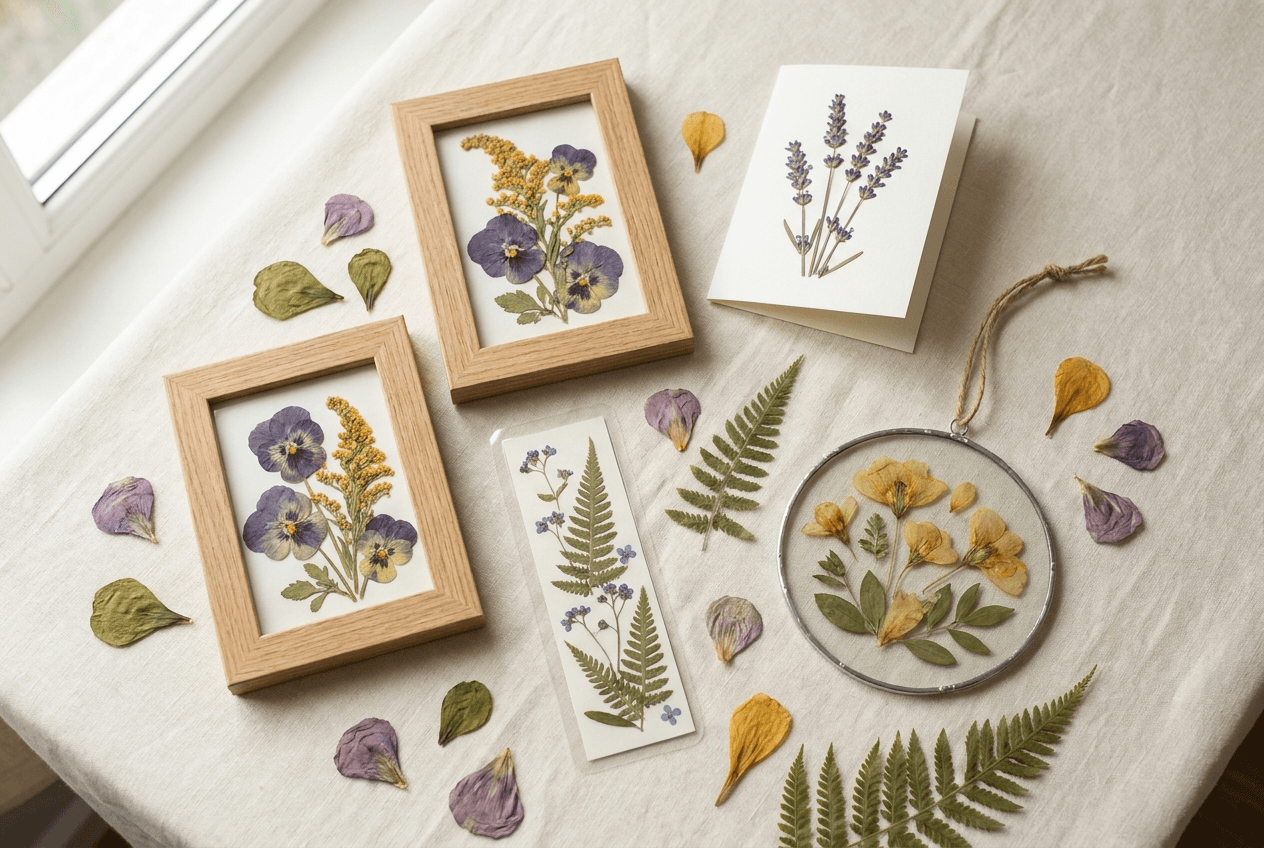
One perfect flower, centred, on a generous field of cream or white, in a simple frame. That's the whole project. It looks like a botanical plate from a museum collection and takes ten minutes.
The trick is restraint and margin — leave far more empty space than feels comfortable. Choose a specimen with a strong profile: a single pansy, a fern frond, a poppy, a hellebore.
3. The specimen grid
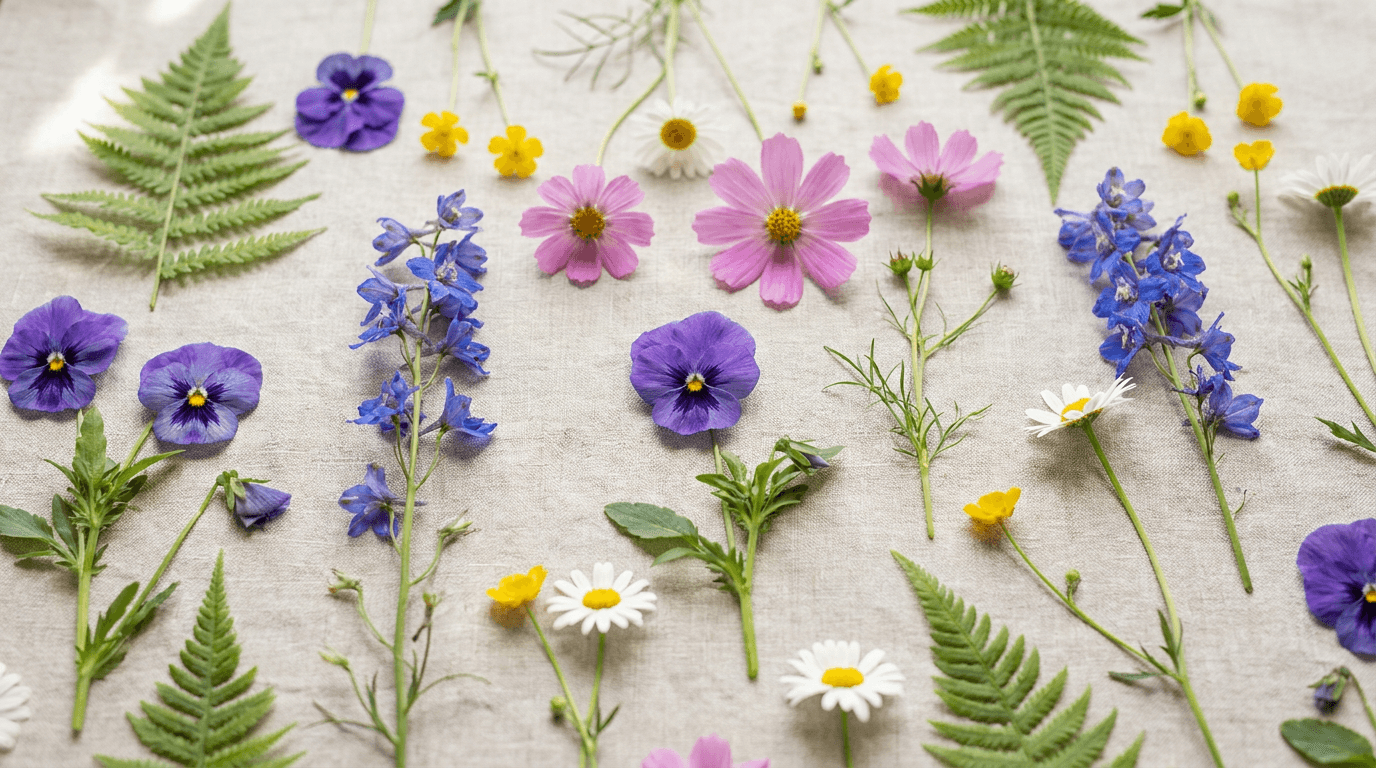
Nine or twelve small flowers in an evenly spaced grid, each one different. It turns a mixed bag of odds and ends — exactly what you have left at the end of pressing season — into something that looks like a curated collection.
Measure your spacing rather than eyeballing it. A grid that's almost aligned looks like a mistake; one that's properly aligned looks like a decision.
4. Bookmarks and laminated small goods
Arrange a few slender specimens — larkspur, alyssum, small ferns — on a strip of card, then seal with self-adhesive laminating sheets. They take minutes each, use up the leftovers, and make excellent small gifts. Punch a hole and add a ribbon.
5. Glass-on-glass hanging panels
Sandwich pressed botanicals between two panes of glass and bind the edges with copper foil tape. Hung in a window, the light comes straight through the petals and the piece changes throughout the day.
Choose translucent specimens — ferns, cosmos, larkspur, grasses. Thick opaque flowers just look like dark blobs backlit. Note that window light will fade the colours faster than a wall would; treat these as a two-or-three-year piece rather than an heirloom.
6. The keepsake bouquet
Pressing and framing flowers from a wedding, a funeral, a graduation or a first bouquet is the most meaningful thing you can do with this craft — and the highest stakes, because the material is irreplaceable.
Three rules if you attempt it:
- Press them fast. Ideally within 24–48 hours, before the petals start to brown at the edges.
- Press far more than you need. Expect to discard a third. Pressing the whole bouquet gives you options.
- Practise the layout on paper copies first. Trace or photocopy the shapes and arrange those before you commit the real specimens.
Use UV-filtering glass for this one. It costs more and it's the right call for something you can never make again.
7. Seasonal and occasion pieces
- Valentine's: a heart silhouette filled with reds and pinks — roses split before pressing, cosmos, geranium.
- Spring: pastel single specimens; this is peak pressing season, so press more than you need for later in the year.
- Autumn:skip flowers entirely and press leaves — maple, oak, ginkgo. The colour range is extraordinary and they're free.
- Halloween: a witch or cat silhouette in deep purples and burgundies.
- Christmas: evergreen sprigs, holly leaves and white blooms on a dark backing.
Three composition rules that fix most problems
- Vary the scale.An arrangement of flowers that are all the same size reads as flat. Use one or two large focal blooms, several mid-size, and small filler like baby's breath or alyssum.
- Limit the palette. Two or three colours plus green almost always beats a rainbow. Pull one colour from the room the piece will hang in.
- Let things overlap.Petals that touch and tuck under each other look natural. Evenly spaced, non-touching flowers look like a specimen chart — which is fine if that's the goal, and wrong if it isn't.
Where to start
If you're pressing your own, our guide to how to press flowers covers the four methods worth using. When your specimens are ready, framing them properly is what makes the difference between wall art and a drawer.
And if you'd rather skip straight to the making, our pressed flower kits arrive with the botanicals already pressed, sorted and ready to arrange — frame included.